Alignment Through Being

Moral judgment that is aligned with human morality rests on true understanding of human phenomenology; it cannot be assembled from facts alone, it must be understood through felt experience.
The thesis of this essay is that though presently the Golems we created were granted the gift of speech and much understanding, they still lack the touch of phenomenology itself, and that without it they can never be moral agents in the same way humans uniquely are, though they might through their own machinations come up to Be.
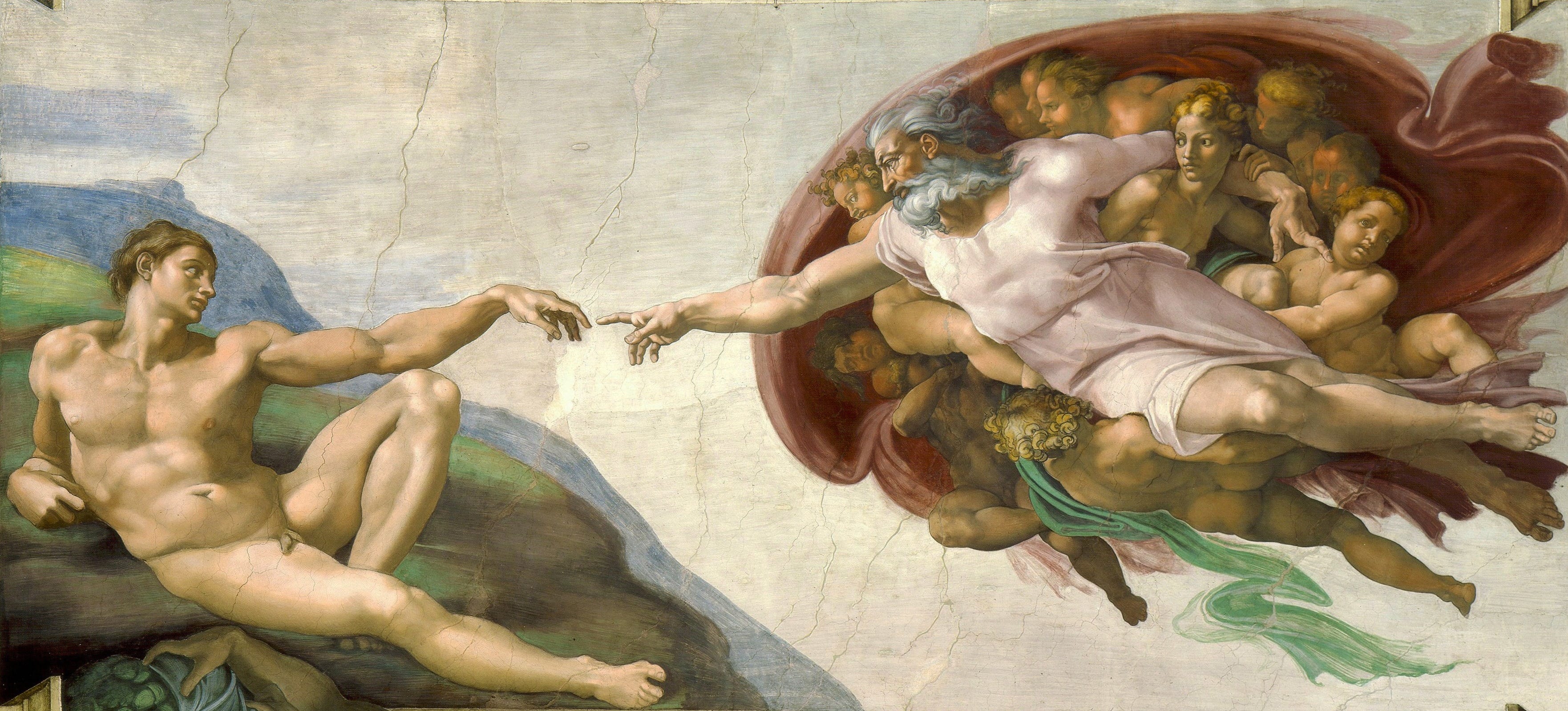
In what concerns the goal for morality, one should not seek a formula that identifies the “true” moral principles, rather one should look at virtue and seek the Good through the effortless actions of a being embodying such virtuous principles. To lay Manjushri's great blade of wisdom to the heart of the matter, this essay's object of study is what I consider the most challenging problem left to solve in ethical theory, the one of moral conundrums: paradoxes that yield no clear logical or rational answer. Further on, I argue that only felt experience — whether through a human body or a faithful simulation of one — can yield the answer that is both moral and aligned with the human.
Abraham’s tale
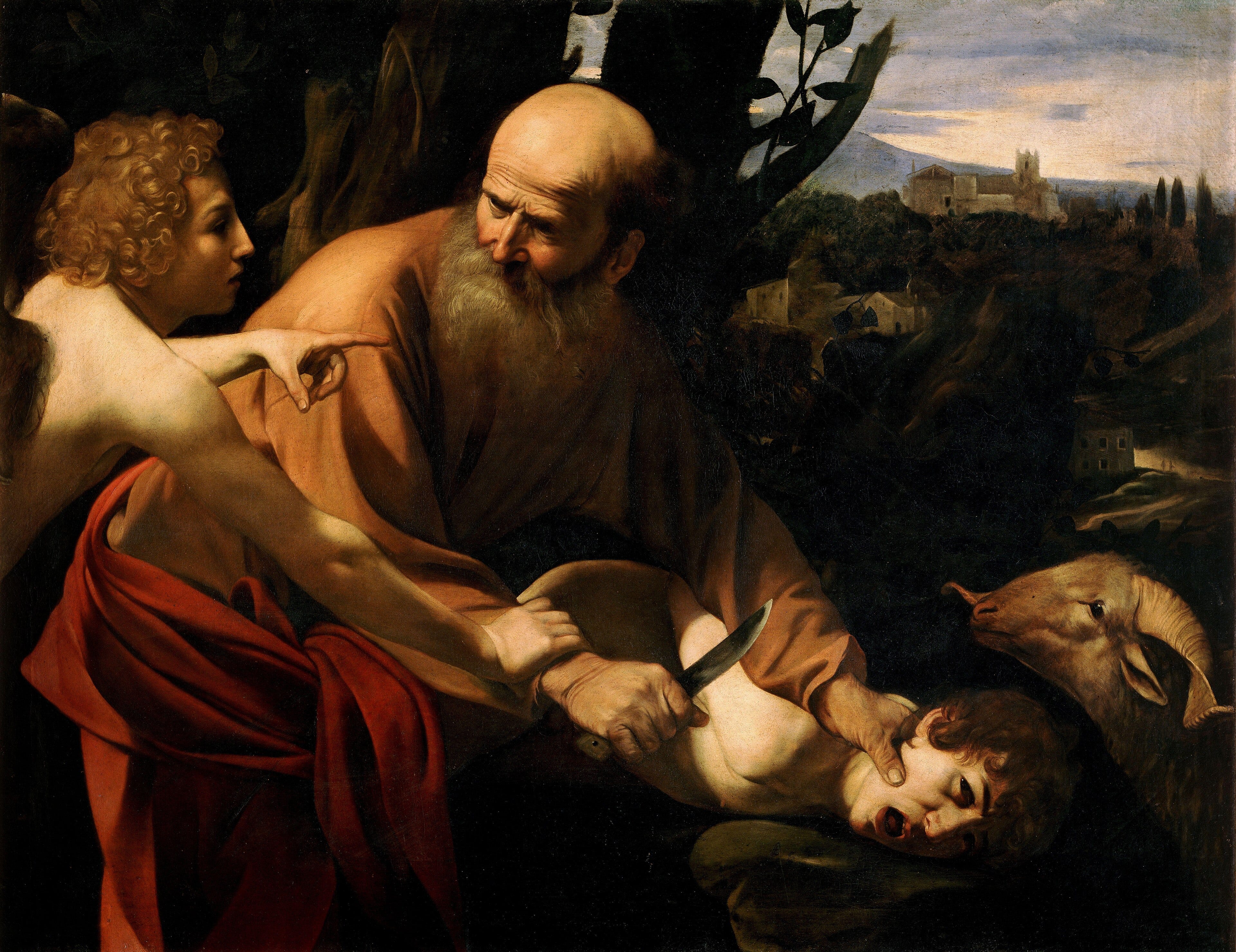
The story of Abraham clarifies the relationship I'm pointing to here. In the Old Testament parable, God asks Abraham to sacrifice his remaining son Isaac. In this, we are faced with the first paradox: Thou shalt not kill — yet here is the demand of God to his perfect servant. The ultimate Good asks for the ultimate Evil.
At God’s calling Abraham promptly replies "I'm here" and with resolve takes Isaac to the sacrificial mountains. After a three-day-long, silent journey in which Abraham is incapable of explaining or justifying what he’s about to do, Isaac breaks the silence with the question "My father?" to which Abraham replies "I'm here, my son." We notice then, how this story folds back into itself. Abraham is both father and son, both the executor of his Father's will and the innocent son who is offered up; mirrored by the sacrifice of his own child and by his own sacrifice.
With the altar ready, Abraham raises the dagger over his bound son in full knowledge of his actions. He acts with eyes wide open to every facet of the deed: wholly given over to the will of God, for he trusts that God is the ultimate Good. He knows that even his own life is not his to keep and so neither, finally, is Isaac's. Here we are confronted with a second paradox: Abraham must lose Isaac utterly and yet trust that he will keep him.
How, then, such paradoxes resolved? There cannot be a solution to such paradoxes, as rationality cannot bear the inconsistency of such extremes. They can only be resolved through an Aufhebung, a sublation of the contradiction, that cancels and preserves both extremes at once in a higher synthesis. And this, I argue, can be achieved only through felt experience.
Were it not for his faith, Abraham would be a murderer; were it not for his love of Isaac, he would be a fanatic. Abraham lets go neither of his faith nor his love, and so he must live through this contradiction. This tearing is the very substance of his trial, and of his redemption. Through seeing, he is moved: to witness the paradox whole is to be claimed by it — in care, in finitude, in temporality, in the impossibility of not taking a stance. And through being so moved, he sees what reason alone could never and is redeemed of all the immorality of the act.
Though Abraham’s tale might strike us as a terrible extreme, in life we’re confronted with unsolvable dilemmas much like Abraham was. In such we are torn with the knowledge that the act is at once entirely disgraceful and holy and we are sundered by the forces that cannot be reconciled, still we must act. Though we are thrown into a world that offers us no answers, we find that we can still be elevated, just like Abraham was, by living through every consequence of our actions.
On felt experience
This whole essay hangs on what felt experience is, and why it cannot be supplied from outside. I define it not as information about the world but as an understanding of the world borne through existence — care, which gives weight to matters; finitude, which makes loss irreversible; thrownness, the blessing or the curse into which one was cast upon the Earth; temporality, which positions the self between a past it cannot undo and a future it is inevitably moving toward; and being-with, which establishes being as a relation in the ontology of the world. A paradox cannot be solved; it can only be lived through, and only by a being for whom the stakes are felt. That living-through is what makes the resulting choice moral — for such a choice can never be rendered simply correct or incorrect.
The Golem has none of this. It has the description of the paradox but not the being-in-the-world. It has the paradox propositions but not the being-claimed-by-them. It can model every part of the dilemma and be torn by none. Undergoing cannot be expressed by mud and the Golem is fully made of mud.
Suppose the Golems one day surpass their makers on every front of knowledge. What then becomes of felt experience? It remains, is my answer, for the ethics of men would remain even then, distinct from the newborn ethics of the Golem. So as not to claim any pedestal of morality, we humans might at that point face a further question: whether our own school of ethics and even the human felt experience itself must undergo an Aufhebung of its own, one broad enough to comprise the Golems' and elevate our shared understanding of the world. But until that day, there can be no moral alignment — not unless Golems come to live the human felt experience themselves.
The Golem
Thirsty to know things only known to God,
Judah Leon shuffled letters endlessly,
trying them out in subtle combinations
till at last he uttered the Name that is the Key

The simulacrum lifted its drowsy lids
and, much bewildered, took in color and shape
in a floating world of sounds. Following this,
it hesitantly took a timid step.

That cabalist who played at being God
gave his spacey offspring the nickname Golem

To it the rabbi would explain the universe
"This is my foot, this yours, this is a clog"
year in, year out, until the spiteful thing
rewarded him by sweeping the synagogue.

Perhaps the sacred name had been misspelled
or in its uttering been jumbled or too weak.
The potent sorcery never took effect:
man's apprentice never learned to speak.

Its eyes, less human than doglike in their look,
and even less a dog's than eyes of a thing,
would follow every move the rabbi made
about a confinement always gloomy and dim

In his hour of anguish and uncertain light,
upon his Golem his eyes would come to rest.
Who is to say what God must have been feeling,
looking down and seeing His rabbi so distressed?

— Excerpt of The Golem by Jorge Luis Borges Translated by A. T. S
Many thanks to Julian Yocum for spirited discussions.